OEM Manufacturing Services: What Procurement Teams Need to Know
By Moksh Parjapati · 9 min read
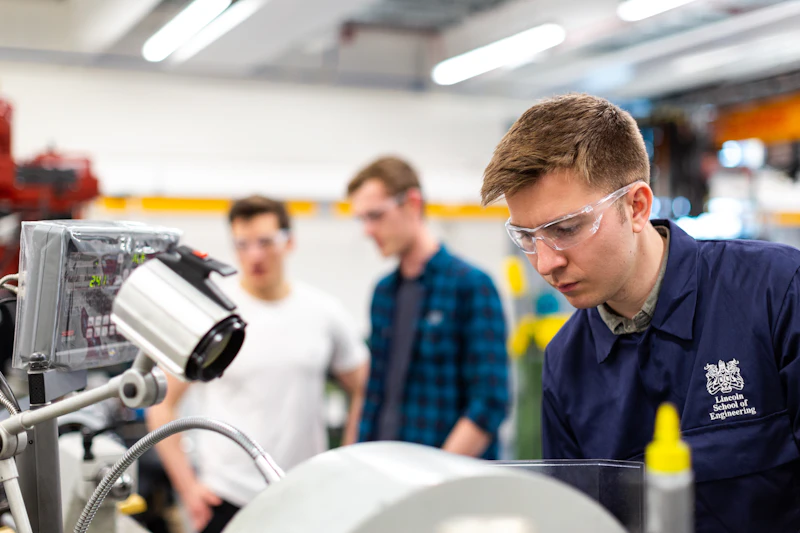
Blog 56 of 200 ═══════════════════════════════════════ SEO Title: OEM Manufacturing Services: What Procurement Teams Need to Know Meta Description: Need reliable OEM manufacturing services? Learn how scaling hardware startups vet partners, manage risks, and build resilient production lines for the US, UK, and Australia. Slug: oem-manufacturing-services-procurement Primary Keyword: OEM manufacturing services Secondary Keywords: OEM partner hardware, original equipment manufacturer, OEM contract electronics, scaling hardware OEM, OEM vs ODM manufacturing GEO Phrase: How do OEM manufacturing services work for scaling hardware startups? Target Market: US / UK / Australia Niche Tag: B2B Manufacturers & Exporters
OEM Manufacturing Services: What Procurement Teams Need to Know
Scaling hardware production introduces profound risks for procurement teams across the US, UK, and Australia. When buyers move from prototyping to mass production, supply chain vulnerabilities quickly expose themselves. Poor vetting leads to intellectual property theft, devastating shipping delays, and inconsistent product quality that destroys customer trust. For companies expanding aggressively, a single misstep in sourcing can pause revenue generation for months. Many founders and commercial operators underestimate the friction involved in migrating their blueprints to a reliable factory floor overseas. Without a clear framework for evaluating vendor credibility, businesses face compounding costs. The challenge shifts from merely designing a strong product to finding an original equipment manufacturer capable of scaling it without defects. This post will teach you how to evaluate OEM manufacturing services, navigate the transition from small batch to large scale, and implement procurement strategies that protect your pipeline and margins.
Why This Matters Right Now
The global supply chain landscape is shifting rapidly as we head into 2026. Procurement teams face a volatile environment characterized by geopolitical tensions, shifting tariff structures, and unpredictable shipping lanes. Relying on legacy procurement habits no longer protects hardware brands from unexpected shocks. Companies need agile, highly transparent OEM manufacturing services to maintain reliable inventory levels. Procurement operators increasingly use generative AI tools to bypass traditional directories. They ask specific, conversational questions about factory capabilities, certifications, and compliance standards rather than simply scrolling through static supplier lists.
This shift means that digital credibility is non-negotiable for manufacturers aiming to win overseas contracts. If an OEM partner hardware provider lacks clear, authoritative positioning online, they immediately trigger red flags for cautious procurement managers. Modern buyers scrutinize websites for exact machinery specs, defect rates, and verifiable client testimonials before ever submitting a request for quotation. As supply chains restructure around resilience rather than pure cost reduction, scaling companies demand partners who communicate clearly, respond quickly, and document their compliance rigorously. Finding the right manufacturer requires looking past glossy brochures and digging deep into their operational transparency and digital footprint. The inability to present verified data online automatically disqualifies hundreds of capable factories from lucrative international tenders.
The Hidden Friction in Sourcing OEM Partner Hardware
Finding a reliable hardware partner involves navigating substantial friction points that often derail early-stage procurement efforts. Many companies attempt to secure an original equipment manufacturer by broadcasting vague requests for proposals across massive B2B directories. This spray-and-pray approach yields hundreds of unqualified responses, leaving commercial teams paralyzed by choices that lack verifiable credibility. Across B2B service sites, buyers often delay inquiry forms when the factory's technical capabilities remain unclear. If a vendor does not explicitly list their production tolerances, minimum order quantities, or testing protocols, serious procurement officers will simply move on.
This friction was clearly visible during the recent project for B2B Manufacturing Client, where a full B2B React JS website was built in 7 days and generated 50+ qualified B2B leads (including 10 in the first 10 days). The success of that rapid deployment stemmed from extreme clarity in messaging. The site stripped away industry jargon and clearly articulated exact production capabilities, which immediately built trust with technical buyers. When sourcing OEM partner hardware, procurement teams need this exact level of clarity from vendors. Ambiguous communication regarding prototyping timelines or tooling costs creates bottlenecks that delay time-to-market. A structured vetting process that demands specific technical documentation upfront eliminates underperforming factories early, saving scaling hardware OEM brands thousands of dollars in wasted negotiations and failed sample runs.
Understanding OEM vs ODM Manufacturing and Finding the Right Fit
Procurement operators must clearly define their product requirements to select the correct production model. The distinction between building a proprietary design and modifying an existing product defines the entire supply chain strategy. Companies holding exclusive patents need partners who respect intellectual property boundaries and execute precise schematics. Understanding OEM vs ODM manufacturing is critical because mixing these two models often leads to compromised product architecture or licensing disputes down the line. It is incredibly common for inexperienced buyers to engage an ODM thinking they own the design, only to discover later that the factory holds the rights to the core mechanisms.
How do OEM manufacturing services work for scaling hardware startups? OEM manufacturing services allow startups to hand over their proprietary designs, blueprints, and material specifications to a factory that builds the product entirely from scratch. The manufacturer acts strictly as the production arm, meaning the startup retains full ownership of the intellectual property and design rights. This process typically involves rigorous prototyping, custom tooling creation, and strict quality control protocols tailored to the startup's exact engineering standards. By leveraging these services, startups can scale mass production without investing millions in their own factory infrastructure.
Choosing the right partner requires auditing their previous work with similar product categories. Factories that specialize in simple consumer plastics will struggle to meet the strict tolerances required for medical devices or aerospace components. Procurement teams must request detailed case studies proving the manufacturer has successfully executed similar technical requirements.
Building a Resilient Pipeline for OEM Contract Electronics
Securing a dependable flow of goods requires more than a signed contract; it demands continuous oversight and systemic risk management. When dealing with OEM contract electronics, the complexity of printed circuit boards, firmware flashing, and component sourcing multiplies the points of potential failure. A minor chip shortage can halt the entire assembly line, stranding capital in unfinished goods. Commercial managers must establish supply chain resilience by insisting on transparent reporting regarding raw material inventory and secondary supplier networks. Failing to inspect the secondary suppliers means you inherit their bottlenecks without any visibility into their operations.
To build a secure and scalable pipeline, procurement teams should implement these practical steps:
- Require prospective manufacturers to provide a complete bill of materials breakdown to identify high-risk components.
- Mandate third-party quality inspections before the final container loading to catch defects before shipping.
- Establish clear penalty clauses in the manufacturing agreement for failing to meet agreed-upon defect rate thresholds.
- Request the factory’s disaster recovery and business continuity plans to ensure they can handle regional disruptions.
- Audit the manufacturer's environmental and labor compliance certifications to prevent brand reputation damage.
- Schedule regular video walkthroughs of the factory floor to verify machinery maintenance and working conditions.
Executing these steps ensures that the transition from a scaling hardware OEM operation to enterprise-level production remains stable, predictable, and profitable. [External link: Global hardware supply chain resilience reports - industry data source]
How Moksh Can Help
Procurement teams and B2B manufacturers often struggle to align their digital presence with the expectations of serious global buyers. Moksh operates as a specialized freelance B2B growth consultant who bridges the gap between technical execution and commercial growth. By building fast, conversion-focused React JS websites, Moksh ensures that manufacturing businesses project the high-trust digital authority required to secure massive international contracts.
Moksh combines rapid technical development with advanced SEO and GEO strategies to position B2B manufacturers directly in front of procurement teams searching for reliable partners in the US, UK, and Australia. Through targeted LinkedIn content strategy and highly efficient Google Ads and Meta Ads management, Moksh drives qualified buyer traffic to landing pages optimized for inquiry conversions. By stripping away friction and focusing on buyer intent, Moksh helps manufacturing firms scale their pipeline with high-value leads. Ready to diagnose why your current site is not converting? [Internal link: Growth Audit Booking - Book your consultation].
Regional Impact & Commercial Execution
Whether you are scaling an enterprise SaaS platform or a mid-market industrial brand, digital infrastructure must be tailored to your target geographic buyer intent. For instance, B2B founders operating in Fayetteville face very different local market dynamics than companies competing in El Paso.
By combining sub-500ms Edge rendering with high-intent Generative Engine Optimization (GEO), we ensure your platform ranks for both local and global commercial queries. For a full breakdown of our technical capabilities, explore our custom B2B Growth Services or review our verified client outcomes in our Enterprise Case Studies.
Conclusion: What to Do Next
Scaling hardware production demands a rigorous approach to vetting and securing OEM manufacturing services. Procurement teams must eliminate ambiguity by demanding precise technical capabilities and compliance documentation upfront. Understanding the critical differences in manufacturing models ensures that intellectual property remains protected during scaling. Finally, establishing strict quality control checkpoints and component transparency safeguards your supply chain against unforeseen disruptions. By applying these exact frameworks, scaling brands can transition to mass production without compromising quality or margins. Take control of your digital acquisition and pipeline growth today. Book a free 30-minute growth audit.
FAQ
What are the main benefits of using OEM manufacturing services? Using OEM manufacturing services allows companies to produce custom, proprietary products without the massive capital expenditure required to build their own factories. Brands retain full control over their intellectual property, product design, and material specifications. The manufacturer simply provides the labor, machinery, and production expertise, enabling businesses to scale rapidly and maintain competitive pricing across key target markets.
How do buyers verify an OEM partner's credibility? Serious procurement teams verify an OEM partner by requesting their ISO certifications, previous client case studies, and exact defect rate history. They also demand third-party quality inspections and perform comprehensive audits of the factory's raw material supply chain. In high-trust categories, buyers usually compare these credibility signals extensively before they ever sign a manufacturing agreement.
What is the difference between OEM and ODM? OEM (Original Equipment Manufacturer) builds products entirely based on the buyer's unique, proprietary designs and specifications. The buyer owns the intellectual property. ODM (Original Design Manufacturer) provides pre-designed products that buyers can slightly modify and brand as their own, which is faster but offers far less differentiation and absolutely no true intellectual property ownership for the buying brand.
Ready to Turn Your Website Into a High-Converting B2B Lead Machine?
If your website gets traffic but isn't producing booked sales calls, review our B2B Growth Services or claim a Free B2B Audit to eliminate friction and scale qualified pipeline.
Related Founder Guides
Regional Growth Infrastructure
Rankur architects custom Next.js websites, SEO, and lead engines for B2B founders across major global technology hubs: