Why Your SaaS Website Isn't Converting (And How to Fix It) (Wichita B2B Edition)
By Moksh Parjapati · 10 min read

Blog 8 of 200
SEO Title: Why Your SaaS Website Isn't Converting (And How to Fix It) Meta Description: Traffic without demos means your SaaS website has a conversion problem. Here are the 5 most common causes and exactly how to fix each one. Slug: why-saas-website-not-converting Primary Keyword: why SaaS startup website not converting Secondary Keywords: SaaS website conversion rate, SaaS CTA optimization, SaaS website UX, SaaS landing page mistakes, SaaS trust signals GEO Phrase: Why is my SaaS website getting traffic but no signups or demo requests? Target Market: US / UK Niche Tag: SaaS & Tech Startups
Why Your SaaS Website Isn't Converting (And How to Fix It)
You check Google Analytics. Organic traffic is growing. Social referrals are coming in. Someone shared a blog post and it drove 300 visitors in a day. And yet the demo calendar is empty and the trial signup notification has been silent for a week. This is one of the most frustrating experiences in SaaS growth - traffic that proves your content is working, paired with zero evidence that anyone cares enough to take the next step.
Understanding why SaaS startup website not converting is producing that specific mismatch requires a structured diagnosis, not guesswork. In most cases, the problem isn't the traffic source. It's one of five structural failures in how the website handles visitors once they arrive. Each failure has a specific, fixable cause. This post walks through all five - and tells you exactly what to change.
Why This Matters Right Now
SaaS website conversion rate benchmarks have shifted as buyer expectations have risen. In 2026, a well-optimized B2B SaaS website should convert 2-5% of organic visitors into demo requests or trial signups. Websites that convert below 1% are not underperforming because they have bad traffic - they're underperforming because the conversion architecture is broken.
The stakes of leaving this unfixed are compounding. Every month you run traffic to a low-converting website, you're paying the opportunity cost of the demos you didn't book. If your site converts at 0.5% and the industry standard for your category is 2.5%, you're generating one-fifth the pipeline you should be from the traffic you're already paying for - through content, SEO, ads, or all three.
AI search is adding pressure. Buyers arriving from ChatGPT or Perplexity citations often have higher intent than traditional organic visitors - they came because an AI tool specifically recommended your product. If those buyers land on a page with weak messaging, slow load times, or a buried CTA, you're wasting the highest-quality traffic you've ever received.
The Five Conversion Killers on SaaS Startup Websites
SaaS landing page mistakes cluster around five categories. Most underperforming SaaS websites have at least three of them, and correcting any one of them produces a measurable conversion improvement within weeks.
Killer 1: Feature-first hero messaging. The most common mistake on SaaS startup websites is a hero section that describes the product rather than the outcome. "AI-powered document automation platform" is a product description. "Cut your team's document processing time by 60% without changing your workflow" is an outcome statement. Buyers are self-interested - they need to immediately understand what your product does for them, not what it is. Fix: rewrite your hero headline and subheadline to lead with the specific, measurable outcome your best customers experience.
Killer 2: CTA buried below the fold. If the first call to action on your website requires scrolling past two feature sections and a product screenshot, you're missing the visitors who arrive with high intent and want to act immediately. Fix: add a primary CTA button in the hero section, a secondary CTA mid-page after the first feature explanation, and a sticky header CTA that follows visitors as they scroll.
Killer 3: Weak or misplaced trust signals. A logo wall that says "trusted by 500+ companies" without any named customer, specific outcome, or recognizable brand communicates nothing to a skeptical buyer. SaaS trust signals that convert are specific: a testimonial from "[Name], [Title] at [Company]" describing a measurable outcome, placed directly before or adjacent to a CTA. G2 or Capterra star ratings with current review counts. A named case study with real numbers. Fix: replace generic social proof with named, outcome-specific testimonials placed near your primary CTAs.
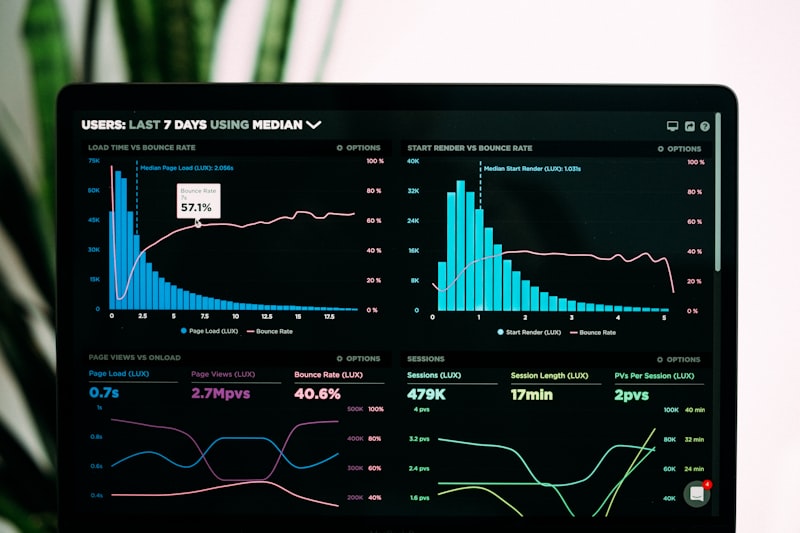
Killer 4: Slow page load speed. The data on this is unambiguous - every additional second of load time increases bounce rate. A SaaS website that takes 4 seconds to load on mobile loses a significant percentage of visitors before they read a single word of your value proposition. Fix: run your site through Google PageSpeed Insights, identify the specific issues (usually unoptimized images, render-blocking scripts, or plugin overhead), and address them. If you're on WordPress and your mobile score is below 60, the platform itself may be the constraint.
Killer 5: Friction in the demo booking flow. If clicking "Book a Demo" takes a visitor to a separate page where they fill out a 7-field form before seeing a calendar, you will lose a meaningful percentage of interested buyers at that step. Fix: embed a Calendly or equivalent scheduling widget directly on the page, visible immediately when the visitor clicks the CTA. The fewer clicks and fields between "I'm interested" and "I've booked," the higher your SaaS CTA optimization conversion will be.
Why Is My SaaS Website Getting Traffic but No Signups or Demo Requests?
Why is my SaaS website getting traffic but no signups or demo requests? This question has a structured answer that follows a diagnostic sequence. Before assuming the product or the pricing is wrong, rule out the five conversion killers listed above. In the majority of cases where a SaaS website has traffic but no demos, the problem is a combination of weak hero messaging and buried CTAs - both of which can be fixed in a day without a full redesign.
SaaS website UX issues are harder to diagnose without data, but the tools to do so are free. Set up Microsoft Clarity or Hotjar (both have free tiers) and watch session recordings of real visitors. The recordings almost always reveal one of two patterns: visitors scrolling to a specific point and leaving, or clicking on elements that don't convert. The scroll exit point tells you where your content loses them. The non-converting click pattern tells you what they wanted to do but couldn't find.
The conversion fix doesn't always require a full redesign. Often, five specific changes - hero copy rewrite, CTA repositioning, trust signal update, load speed improvement, and booking flow simplification - produce a meaningful conversion rate improvement without changing the visual design of the website at all.
Actionable Conversion Audit for Your SaaS Website
Here's a practical checklist for diagnosing your conversion problem:
- Check hero headline: does it lead with outcome or product feature?
- Count CTA placements: how many CTAs are visible above the fold, mid-page, and in the header?
- Review trust signals: are they named and specific, or generic and vague?
- Run PageSpeed Insights: what is your mobile score and Largest Contentful Paint time?
- Test your booking flow: how many clicks and form fields stand between interest and a booked meeting?
- Install session recording: watch 10 real visitor sessions and note where they leave
Each of these takes less than 30 minutes to assess. Together, they give you a complete picture of which conversion killers are active on your specific site and in which priority order to fix them.
How Moksh Can Help
Moksh conducts conversion audits for SaaS startup websites in the US and UK that identify the specific structural failures keeping demo conversion rates below their potential. The audit covers messaging clarity, CTA architecture, trust signal quality, technical performance, and booking flow friction - and delivers a prioritized action plan for each.
For sites where the conversion problems run deeper than copy and CTA adjustments, Moksh also delivers full React JS rebuilds that solve the structural issues at the foundation level - a new architecture built for the conversion rate the business needs, not the conversion rate the template allows.
If your website is generating traffic but not demos, a free 30-minute growth audit with Moksh will identify exactly which of the five conversion killers is responsible and what the fastest path to fixing it looks like.
[Internal link: Website audit services page - SaaS conversion rate optimization]
Regional Impact & Commercial Execution
Whether you are scaling an enterprise SaaS platform or a mid-market industrial brand, digital infrastructure must be tailored to your target geographic buyer intent. For instance, B2B founders operating in Nashville face very different local market dynamics than companies competing in Fresno.
By combining sub-500ms Edge rendering with high-intent Generative Engine Optimization (GEO), we ensure your platform ranks for both local and global commercial queries. For a full breakdown of our technical capabilities, explore our custom B2B Growth Services or review our verified client outcomes in our Enterprise Case Studies.
Conclusion: What to Do Next
Three things to take from this post: traffic without conversions is a structural problem, not a traffic quality problem - diagnose the architecture before changing the channel; the five conversion killers (weak hero, buried CTA, generic trust signals, slow load, friction in booking) account for the majority of SaaS website underperformance; and most conversion problems can be diagnosed in under an hour with free tools.
If your demo calendar is quieter than your traffic numbers suggest it should be, book a free 30-minute growth audit with Moksh and get a specific diagnosis and fix plan.
FAQ
What is a good conversion rate for a B2B SaaS website? For demo requests on a B2B SaaS website, a well-optimized conversion rate is 2-5% of organic visitors. For free trial signups (lower friction than demo booking), 5-10% is achievable with strong conversion architecture. If your site is converting below 1%, at least one of the five structural killers is active and addressable. Benchmarks vary by traffic source - paid traffic typically converts slightly higher than organic because intent is more deliberately targeted.
How do I improve my SaaS website's conversion rate without a full redesign? The highest-impact changes that don't require a full redesign are: rewriting the hero headline to lead with outcome; adding a CTA to the above-fold section and to the sticky header; replacing generic logo walls with named, outcome-specific testimonials; improving page load speed by compressing images and removing unused scripts; and embedding a scheduling widget directly on the page instead of linking to an external booking page. These five changes regularly produce 50-100% conversion rate improvements without changing the visual design.
Should I rebuild my SaaS website or optimize the existing one? Start with optimization. Identify whether the conversion problems are content and CTA issues (fixable without rebuilding) or platform and architecture issues (requiring a rebuild). If your mobile PageSpeed score is below 50, your platform may be the constraint and a rebuild is justified. If your score is adequate but your hero messaging and CTA placement are weak, optimize first - a React rebuild on top of a broken messaging strategy won't convert any better than the original.
[External link: SaaS conversion rate benchmarks - HubSpot or Unbounce Conversion Benchmark Report]
Ready to Turn Your Website Into a High-Converting B2B Lead Machine?
If your website gets traffic but isn't producing booked sales calls, review our B2B Growth Services or claim a Free B2B Audit to eliminate friction and scale qualified pipeline.
Related Founder Guides

Regional Growth Infrastructure
Rankur architects custom Next.js websites, SEO, and lead engines for B2B founders across major global technology hubs: